It is the branch of medicine that helps in administration of justice. It is the duty of every citizen to assist the judicial system. Medical knowledge involving expertise has more responsibility the judicial system. No innocent should be punished. Forensic Medicine is also labelled as State Medicine or Legal Medicine. New laws have come into force since July 2024. Toxicology has also got more relevance now. Newer drugs have come. Criminals have also changed modus operandi. So, there is lot of responsibility on experts in this field.
There is need to impart latest knowledge to students and also create awareness in public. The students should impart practical knowledge of medico-legal work in form of Clinical Forensic Medicine, analytical toxicology, preparation of post-mortem report and attending courts. There is proposal to encourage Digital India by attending courts through video conferencing.
There is proposal to develop autopsy facilities to impart training to undergraduates and to postgraduates at later stage. Laboratory facility for analysis of some poisons will also be developed. Clinical Forensic Medicine services will help in giving opinions on medico-legal issues. Histopathology services will be developed to establish cause of death.
Lectures and tutorials will be imparted to students as per new syllabus approved by NMC. Moot course will also be held.
Department will provide postmortem facilities. Cold storage will be developed for dignified management of dead. Limited toxicology services will be developed.
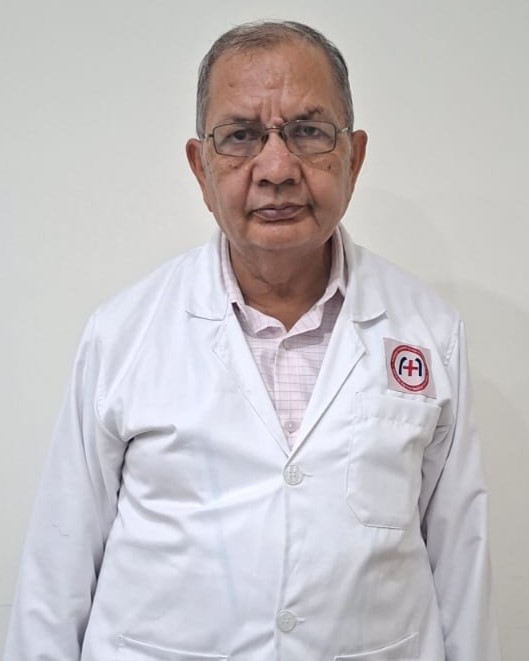
Professor Bhardwaj is an alumnus of Rohtak Medical College, now PGIMS. He obtained postgraduate degree from AIIMS, New Delhi. He is having almost four decades of experience in AIIMS, New Delhi. Vast experience in medico-legal work, teaching and research.
Gupta P., Chandran V, Raj KU, Bhardwaj DN, “Traumatic in-cerebration due to conveyor machine accident – A distinctive injury pattern case report”, J For Legal Med 115 (2025) : 1-5
There is good scope of Forensic Medicine & Toxicology as our Government is encouraging scientific evidence in solving crime. There is more scope of conviction nowadays because of improved technology and it helps the innocent from false criminal cases. Justice will be given to victims of crimes in transparent way.
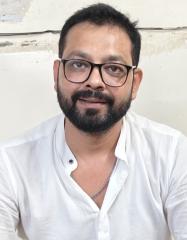
Dr. Sunil Kumar Dahiya is an alumnus of Pt. B. D. Sharma University of Health Sciences, Rohtak, from where he completed his MBBS and postgraduate degree in Forensic Medicine & Toxicology. He has extensive academic and practical exposure in medico-legal work, forensic pathology, and toxicology through his training and professional appointments at premier institutions including PGIMS Rohtak and Lady Hardinge Medical College, New Delhi.
With over seven years of experience in medico-legal investigations, teaching, and research, Dr. Dahiya has conducted a large number of medico-legal autopsies, provided expert opinions to judicial and law-enforcement authorities, and actively contributed to undergraduate and postgraduate medical education. His research interests include forensic pathology, injury analysis, poisoning trends, and medico-legal aspects of public health legislation, with multiple publications in reputed national and international journals.
He is currently serving as Assistant Professor in the Department of Forensic Medicine & Toxicology at Maharaja Agrasen Kedar Nath Gupta Medical College, Nuna Majra, Bahadurgarh, Haryana, an upcoming premier and promising medical college committed to excellence in medical education, research, and healthcare delivery.
Vancouver citation: Kumar V, Dahiya SK, Sabri I, Jakhar JK, Chander H, Yadav N. Patterns and distribution of injuries in railway track fatalities: A 4-year autopsy review from Haryana, India. Asian J Med Sci. 2026;17(3):1–6. doi:10.71152/ajms.v17i3.5074.